I love films like “Nocturne“–it reminded me so much of one of my favorite movies which is the 2018 version of “Suspiria“: art intertwined with the occult, asking the question, What’s the price for success? And how much are you willing to pay for it?
Our main character, Juliet, yearns for the spotlight. She craves recognition, but constantly finds herself overshadowed by her more vibrant twin sister, Vivian. Despite Juliet’s hard work and dedication, she always seems to come up short. This film also reminded me of another favorite of mine, “Masks“, which explores a similar theme: how far will someone go to attain their deepest desires?
If you haven’t watched Nocturne, please note: this review contains spoilers.
![Nocturne movie poster by Studio and or Graphic Artist - [1], Fair use, https://en.wikipedia.org/w/index.php?curid=65343627](http://blessedmanifestation.com/wp-content/uploads/2025/08/Nocturne_poster.jpg)
The Setup
Juliet and her sister Vivian (Vi) are both students at a prestigious art school. While both are musically gifted, Vi is considered the more talented. Early in the film, we see a classmate named Moira performing “The Devil’s Trill” by Tartini. Moments later, as the clock strikes six, Moira jumps from her window. Strange symbols, including a prominent sun, are etched into her walls.
Later, Juliet finds a notebook that falls from Moira’s mailbox. I suspect she was “chosen” to receive the knowledge it contains. Inside are eerie illustrations and indecipherable symbols—five completed pages and a sixth page ripped out. Drawn to the notebook and to Moira’s now-empty room, Juliet discovers the same sun symbol carved into the walls.
The Process
Juliet realizes the scribbles are written backward and can only be read in a mirror—another clue pointing toward dark, possibly Satanic influences (the sun symbol was a big clue but the backwards text sealed the deal for me). Though unaware of the spiritual danger, Juliet notices that reading from the notebook seems to enhance her musical abilities, so much so that she was able to provide a stellar performance during her audition for the senior showcase. Unfortunately despite the great audition, her sister ended up getting the solo.
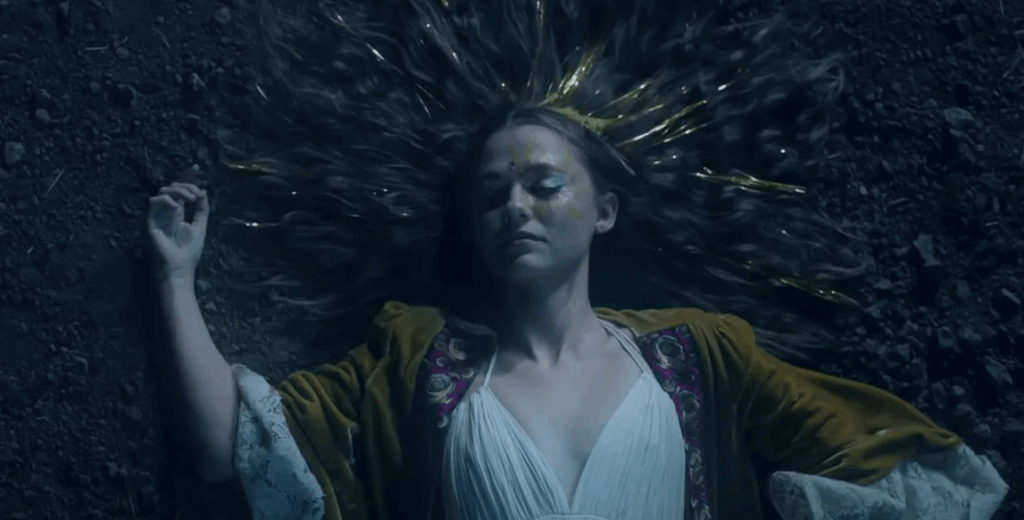
The notebook depicts a five-step process (with a missing sixth step), beginning with an “invocation.” Juliet unwittingly begins the process by reading aloud from the first page and playing “The Devil’s Trill.” As she moves through the steps—often without conscious intent—strange and dangerous events unfold, including her sister’s near-fatal fall, mirroring one of the drawings (depicting a fallen angel).
Climbing the Ladder
Juliet’s fortunes rise as Vivian’s unravel. Vivian is injured, suspended from school, and revealed to be cheating on her boyfriend, Max. Juliet initiates step four: a sexual union, choosing Max as her partner. This scene raises questions about supernatural influence—both seem dazed, and they are in Moira’s old room. Flashes of bright yellow light suggest possible possession or manipulation. This energy throughout the movie has given her a boost of confidence to “go for the gold” with her music career. At this point I wondered if it was actual confidence or the illusion of grandeur? This was alluded to by Juliet’s previous tutor who tried to work with her current talent versus her delusion of being the greatest. I feel like this is related to the symbolism of reaching for the stars–one of those stars could be the sun, and as Icarus tragically learned, that’s one star you can’t touch without paying the ultimate price.
The step four scene was interesting to me because in the book this step is depicted as a man and woman engaging in sexual intercourse. The woman figure is shown with a moon symbol above her head, while the male figure has the sun symbol above his. I was a bit confused by this because if the sun symbol is associated with Satan, then what connection would Max have to him? Unless all males are somehow connected to the Devil? Hmm….
Sacrifice
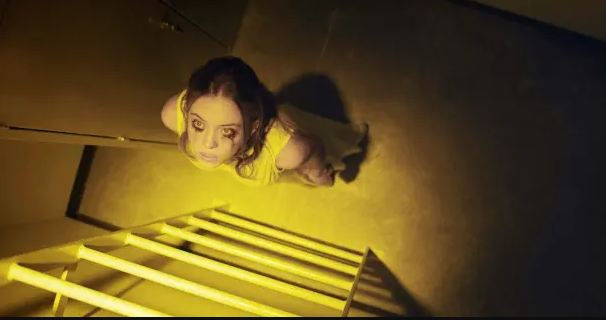
After the completion of step five (which by the way, Juliet doesn’t seem to actually be trying to complete the steps throughout the movie, she just kind of stumbles on them naturally), we come to the end of the notebook: no more pages since page six was ripped out. I wondered about this for the longest time after the movie ended–who ripped out the sixth page? Was Moira instructed to do so before her end? Or possibly the sixth page is different for everyone who reads it, being that Juliet channeled the golden energy to draw her own sixth step. This time she was shown the moment when she’d have to take a “leap of faith” to go for the proverbial gold–to make a “sacrifice”. Finally she seems to snap out of it and come to her senses–clearly the sixth step meant literal suicide–she’d have to literally take a step off a ledge, just like Moira did. At this revelation, Juliet panicked and burned the notebook.
Split Realities
In one reality, Juliet freezes with anxiety and is unable to perform her solo, as a result she chooses to end her life by embracing the unattainable sun, leading to her ultimate demise. Upon her “death” she is granted the second reality, one where she “wakes up” from her trance to a standing ovation for her superb performance (this was the vision the notebook showed her earlier in the movie–giving her a taste of her deepest desire for recognition). So in the end she was granted that desire, which lived only in her mind as she took her last breath and died with a smile on her face.
I love the open ending because it leaves us with various possibilities. I read on a forum that possibly Juliet didn’t actually die and instead was shown a vision of a part of herself taking that leap into the “light”, which meant her embracing the Devil. But because Moira actually dies in the movie by taking that leap, I conclude that she actually did die.
Spiritual Symbolism
The title Nocturne evokes the night, the moon, and dreams—illusions. The sun symbol, tied to false light, represents an unattainable success that ultimately destroys. Both Moira and Juliet are lured by this “light” and die chasing it.
Spiritually, Nocturne is a cautionary tale about ambition, fame, and the seductive nature of shortcuts. It asks: Is a fleeting moment of recognition worth the ultimate price?
The Devil in the Details
Watching this movie was so perfect in this time when so many planets are in retrograde, especially Mercury. When Mercury is in retrograde, this is the time to really pay attention to the fine print. Triple check your work (and words) and make sure you have all the information you need before signing any agreements.
I don’t know what Moira’s journey was to end up with this process, but she was playing “The Devil’s Trill” which was the same composition Tartini supposedly sold his soul for. Possibly by playing the piece, Moira activated this information and therefore created the notebook which then Juliet found. And because the sixth page was ripped out, Juliet didn’t get the final step until it was too late.
Cost of the “Sun”
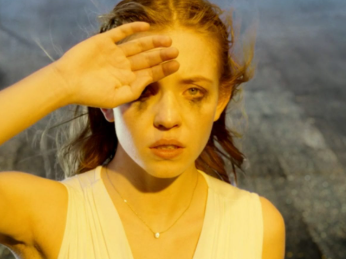
Spiritually I feel this movie serves as a cautionary tale about fame and success–it’s not something that everyone can achieve, and even if they do achieve it, at what cost? Was it worth it to these celebrities in the end? Possibly fame is like drinking saltwater when you’re thirsty–you have the sensation of water with none of the benefits to quench your thirst, and yet so many people go for it.
The interesting thing is that right after watching this movie I saw posts about the Sydney Sweeney (actress who plays “Juliet”) controversy behind the commercial she’s in for “American Eagle” jeans. Since no news is bad news in show business, all this is doing is increasing her fame and visibility in Hollywood.
I feel Nocturne gave us another peek into “Hollyweird” and the entertainment industry as a whole. Since Tartini’s time (and before, I’m sure) people have been “selling their souls” for some kind of recognition–always striving for an unreachable sun, which only burns you in the end. Is a fleeting moment of success worth all the pain? This is a question I can’t answer because it’s not my path but I do wonder about.
And this might be a reach but I have a personal conspiracy theory about actors and entertainers doing movies, songs, and other art to pay homage to the Devil, in order to pay the “cost” of their fame. This doesn’t apply to every celebrity, but I feel it so with Sydney Sweeney, but that’s just my take.